
My Store
Shishito Pepper
Shishito Pepper
Couldn't load pickup availability
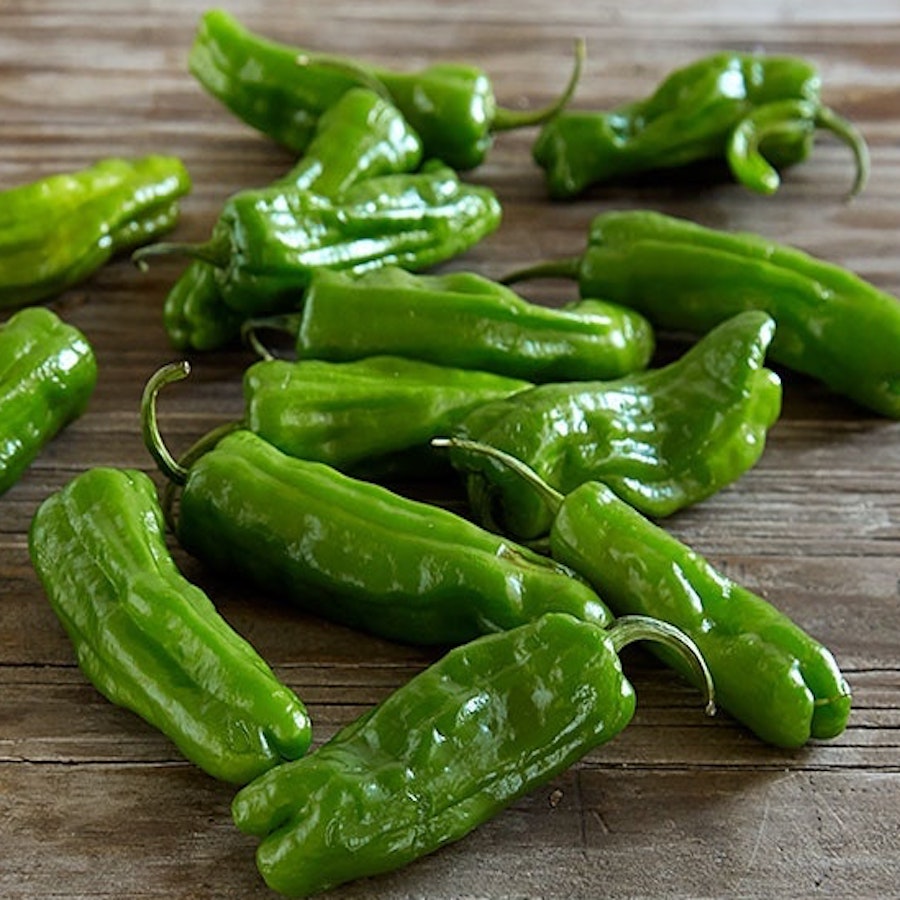
This small, slender, wrinkled Japanese heirloom is great for roasting, grilling, or 'blistering'. Known to have a mild, slightly sweet, smoky, "grassy" flavour, it has become wildly popular of late, due to the element of surprise - 1 in 10 (or 20) peppers is hot! Typically harvested when the pepper is green but you can wait until it turns orange or red for a sweeter pepper. Developed in Japan over 150 years ago, Shishito is a staple in Japanese cuisine and now widely-grown in other areas of the world.
Grows well outdoors or in a greenhouse. Start indoors, seeding 5mm-1cm (1/16-3/8") deep, early March-early April. Keep soil very warm, give lots of light, and transplant into bigger pots before plants become rootbound. Transplant out when weather is very warm and night lows are above 12 degrees C. Space about 45cm (18") apart. 10-21 days to germination, 60 days to green peppers, 75 to red.
Certified organic in British Columbia. IOPA # 1606, 1105, 1920.
How to Harvest Pepper Seeds
Fast Facts
Latin: Capsicum annuum
Cross Pollination: Other pepper varieties
Isolation Distance: 300 feet
Minimum Population Size (variety maintenance): 5-10 plants
Minimum Population Size (genetic preservation): 50 plants
Seeding and Care
Grow peppers as usual, giving 1.5 feet of space between plants to ensure that they grow to their full potential. Mark off the first peppers to form with flagging tape, do not harvest these to eat. Instead, leave these on the plant, allowing the seed inside to ripen. By saving seed from the first fruits to form, your seed population will gradually become earlier to flower and set fruit over many generations.
Seed Maturity
Let peppers get very overripe. They should be cracking and fully red before harvesting for seed. No matter what the target colour for a particular variety is, all peppers will eventually turn red as they ripen further.
Seed Harvest Safety
Before processing peppers for seed, make sure you have the necessary safety equipment. All peppers can be irritating and hot peppers can be downright painful. Always wear gloves when processing peppers, and be very careful not to touch your eyes or genitals with anything that has come into contact with pepper flesh. Even washing your hands very well may not remove the irritating compounds so gloves are always a must. Eye protection and a good quality mask are also recommended as a shield against eye and airway irritation.
Seed Harvest
Slice peppers longitudinally (from stem to tip) and use your gloved hands to scrape out the seeds, detaching any pieces of flesh. Lay the peppers out on a tray lined with paper to dry completely before storing.
Small, thin-walled peppers can be dried whole and crushed to remove the seeds inside, though this is primarily recommended for hot, dry climates where the risk of mould and damp air is low.
